
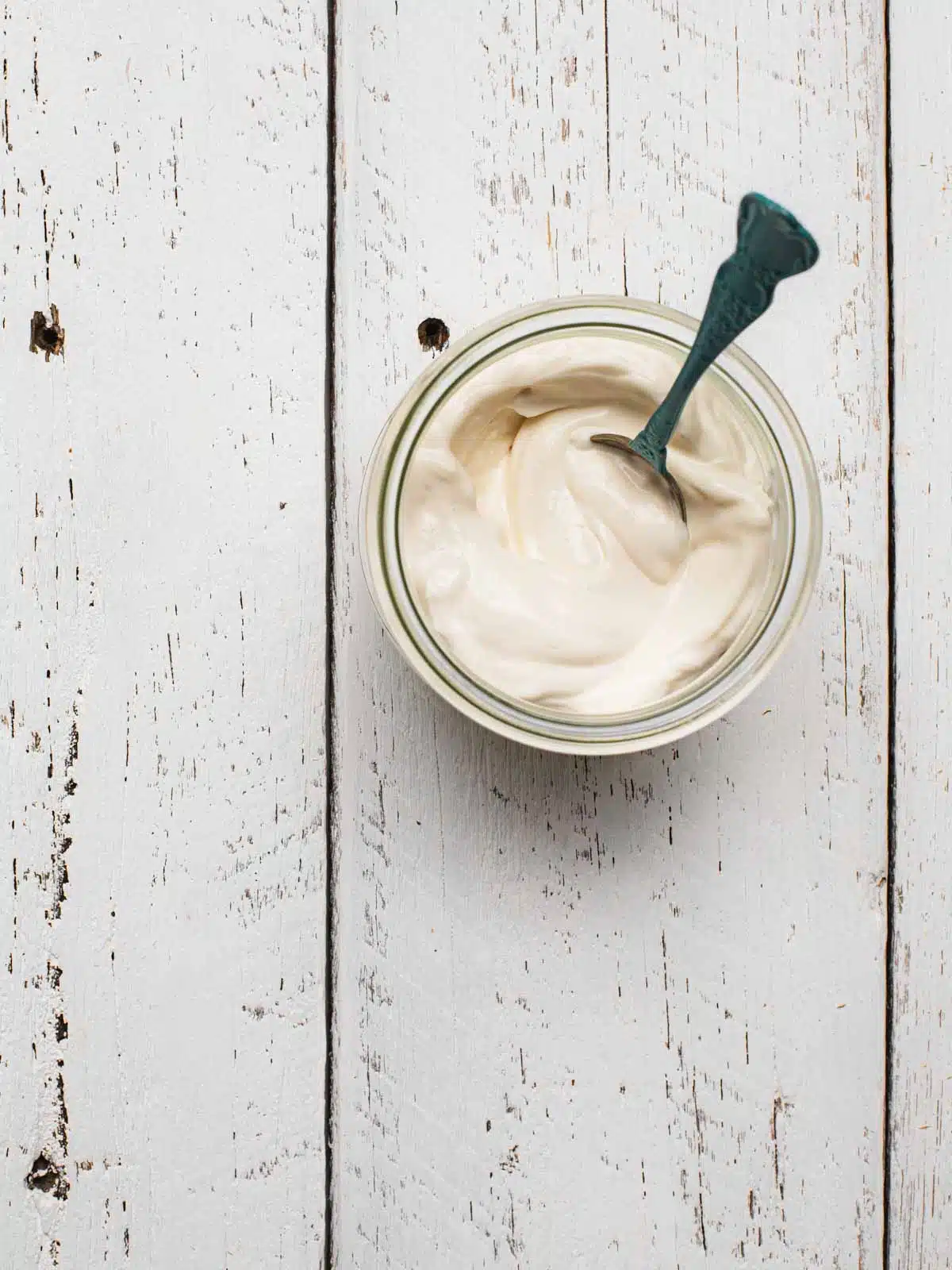
I am calling it - this might be the best vegan mayo recipe ever. Creamy, tangy and thick, this homemade vegan mayonnaise tastes just like the real thing and takes about 5 minutes to make. Made with soy milk, neutral oil, lemon, vinegar and a little kala namak, it's perfect for sandwiches, burgers, slaws and anything else that needs a good dollop.
Got 5 minutes? Then you've totally got time to whip up the ultimate plant-based spread for your next burger, sandwich or coleslaw.
Jump to:
- Can Vegan Mayo Taste Like Real Mayonnaise?
- Why Does Soy Milk Work In Vegan Mayo?
- Ingredients
- How To Vegan Mayo
- Recipe Notes & Fixes
- Ways to Use Your Plant-based Mayonnaise
- Customise Your Vegan Mayo
- How to Store Homemade Vegan Mayonnaise
- FAQs
- Try These Other Plant-based Condiments & Sauces
- Make This Recipe
- Leave a Comment
Can Vegan Mayo Taste Like Real Mayonnaise?
Yes, this vegan mayo tastes like egg-based mayonnaise. I perfected this recipe for my cookbook and make it almost every week. Inspired by Vegenaise (not sponsored), I tested, tweaked and tested again until I had the perfect rich and creamy mayonnaise I was after.
And it all comes together with a little technique. This plant-based mayo uses the same method used to create "traditional" mayo, but without any eggs.
Reader Review: "I've tried a lot of different recipes and brands of vegan mayonnaise and never been happy with the flavour or the texture. This recipe is by far the best for a vegan mayonnaise that I have tried...The ratios of mustard, salt, lemon and vinegar are spot on. The texture is smooth, light, and creamy... It's a winner." Catherine. ★★★★★
Why Does Soy Milk Work In Vegan Mayo?
Mayonnaise is an emulsion - tiny droplets of oil suspended in a water-based liquid. Traditional mayonnaise uses egg yolk to help stabilise that emulsion, while soy milk can do a similar job in vegan mayo because its proteins and natural lecithin help the oil and liquid stay combined.
Ingredients
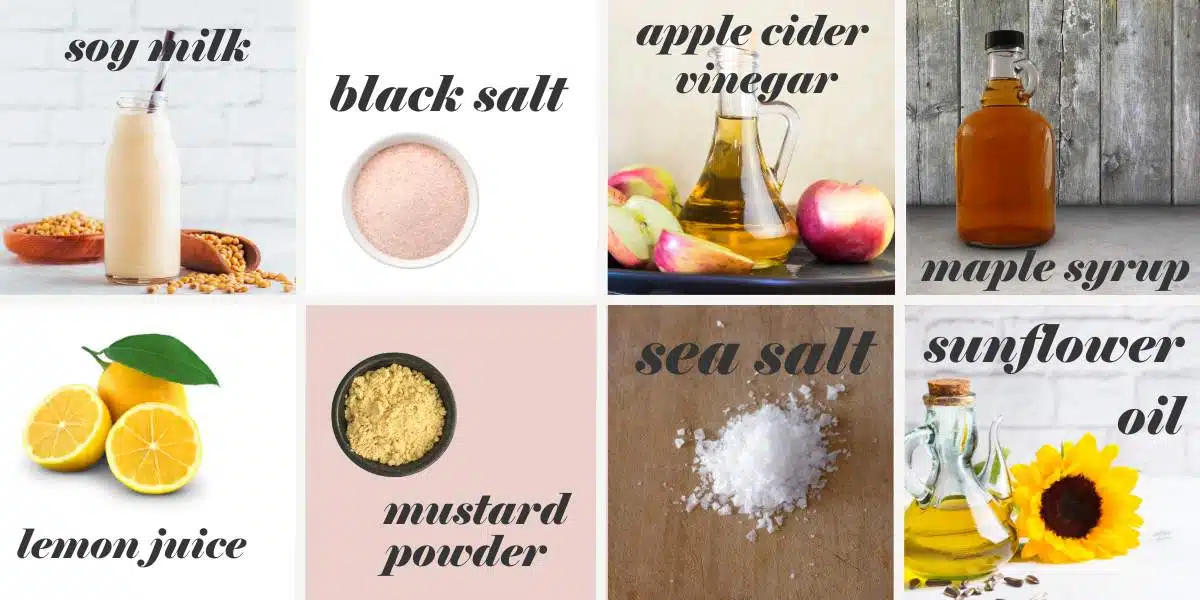
This plant-based mayonnaise recipe only has a handful of ingredients. Here are the main ones →
Soy milk. For a thick and creamy vegan mayo, I use unsweetened soy milk. Its proteins and natural lecithin help stabilise the emulsion, which is why soy milk works so well in this recipe. I tested almond, oat and cashew milk during development, but they didn't thicken in the same way. I have seen pea-protein milk used successfully too, but for me, it's soy milk all the way.
Kala namak. Indian black salt is worth the forage. I buy mine at an Indian grocery store, but it's also widely available online. Kala namak has a high sulphur content, giving it the distinctive eggy aroma and flavour that makes this mayo taste so much like the real thing.
Sunflower oil. I use sunflower oil because it has a mild, neutral flavour that lets the other ingredients shine. You can substitute another neutral-flavoured oil such as canola or vegetable oil, but I'd avoid strongly flavoured oils here.
Maple syrup. It's a curveball, I know, but a touch of maple gives this homemade mayonnaise balance with just a little sweetness. I prefer maple syrup for its depth, but you could use agave instead.
Apple cider vinegar & lemon juice. These give the mayo its tang and zing. I prefer apple cider vinegar for its slight sweetness, but you can substitute white wine vinegar for a sharper flavour. If you do, you may want to add a touch more sweetener. Just taste and adjust.
How To Vegan Mayo
You'll find full instructions and measurements in the recipe card at the bottom of the post.
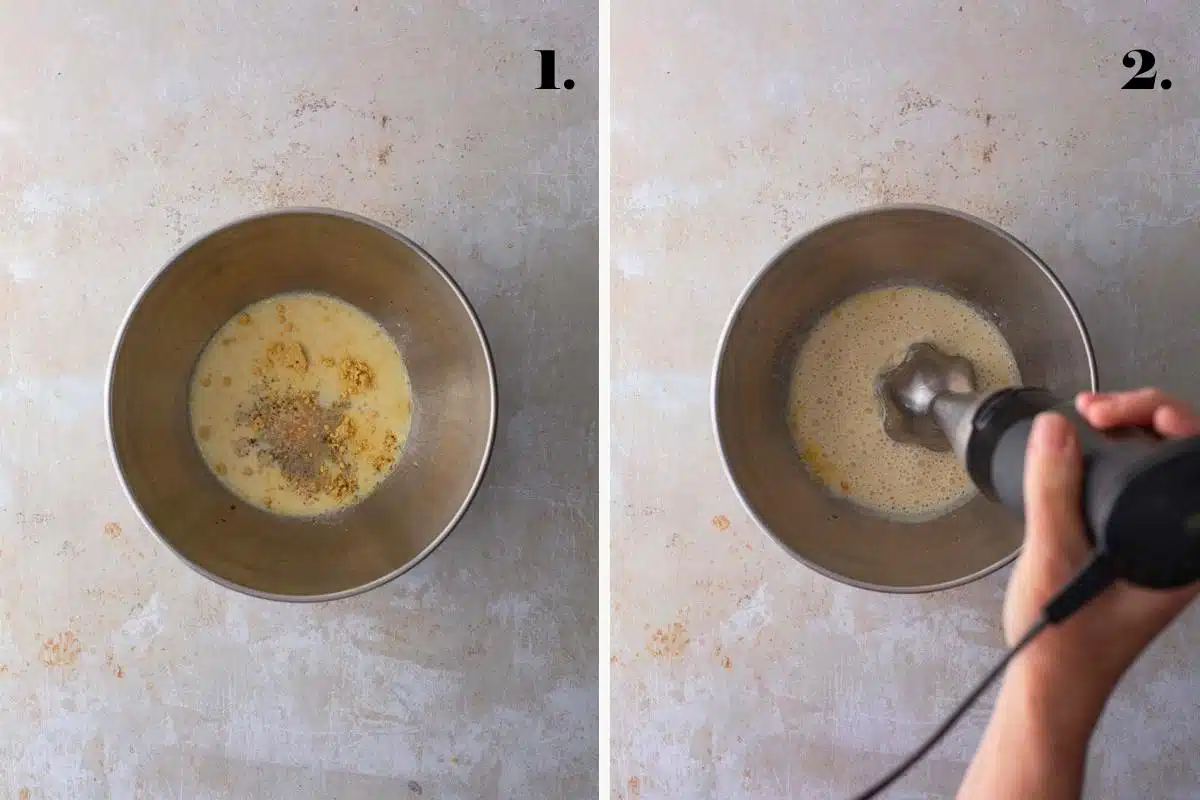
Steps 1 & 2.
Pop all the vegan mayo ingredients other than the oil in to a jar or bowl and give them a quick blend to combine.
Step 3.
Now comes the important bit. Start blending and slowly add the oil in a steady stream.
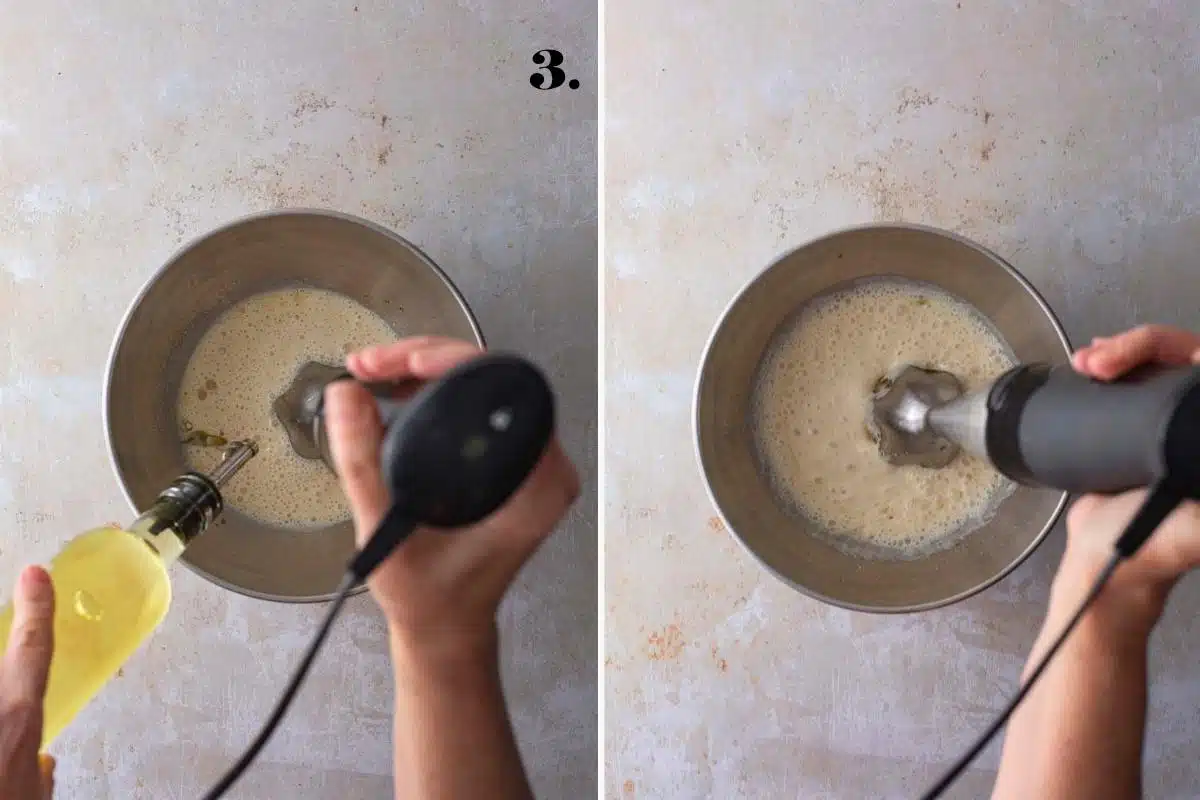
At first, your mayo is going to look bubbly rather than thick. Don't panic. This is the beginning of the emulsification process. Keep going.
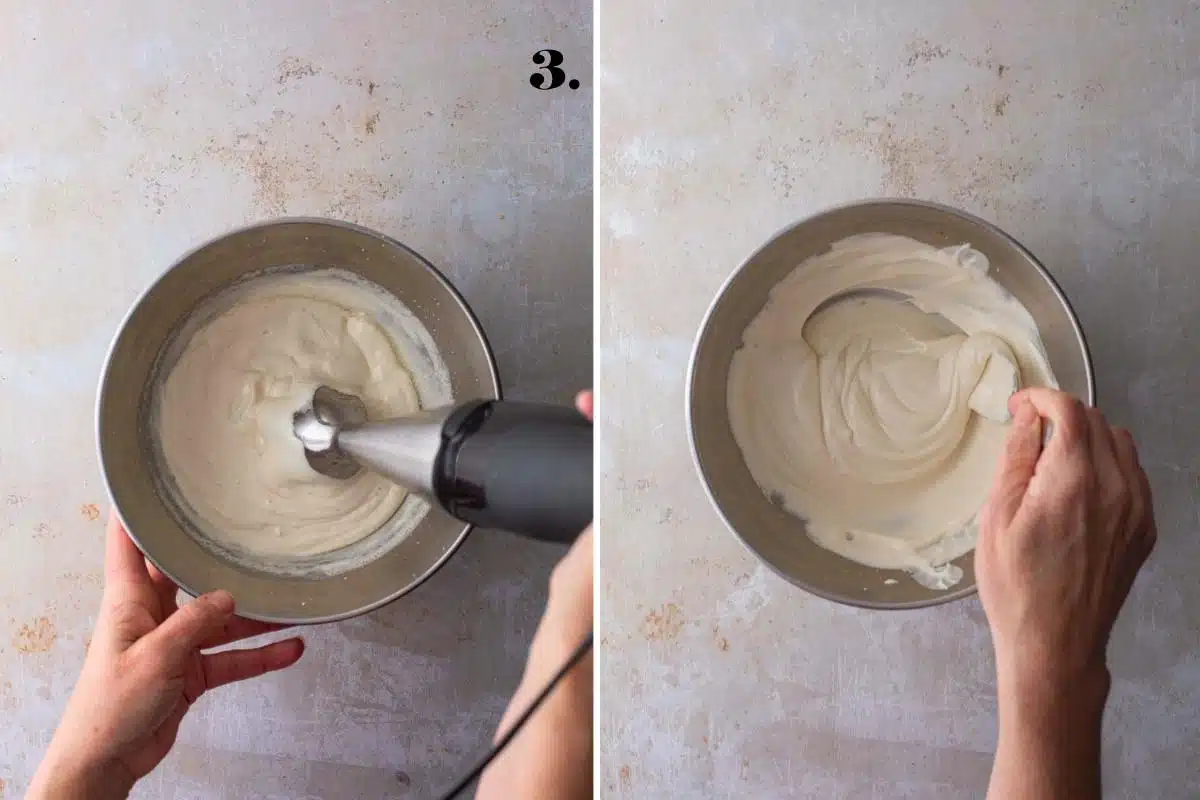
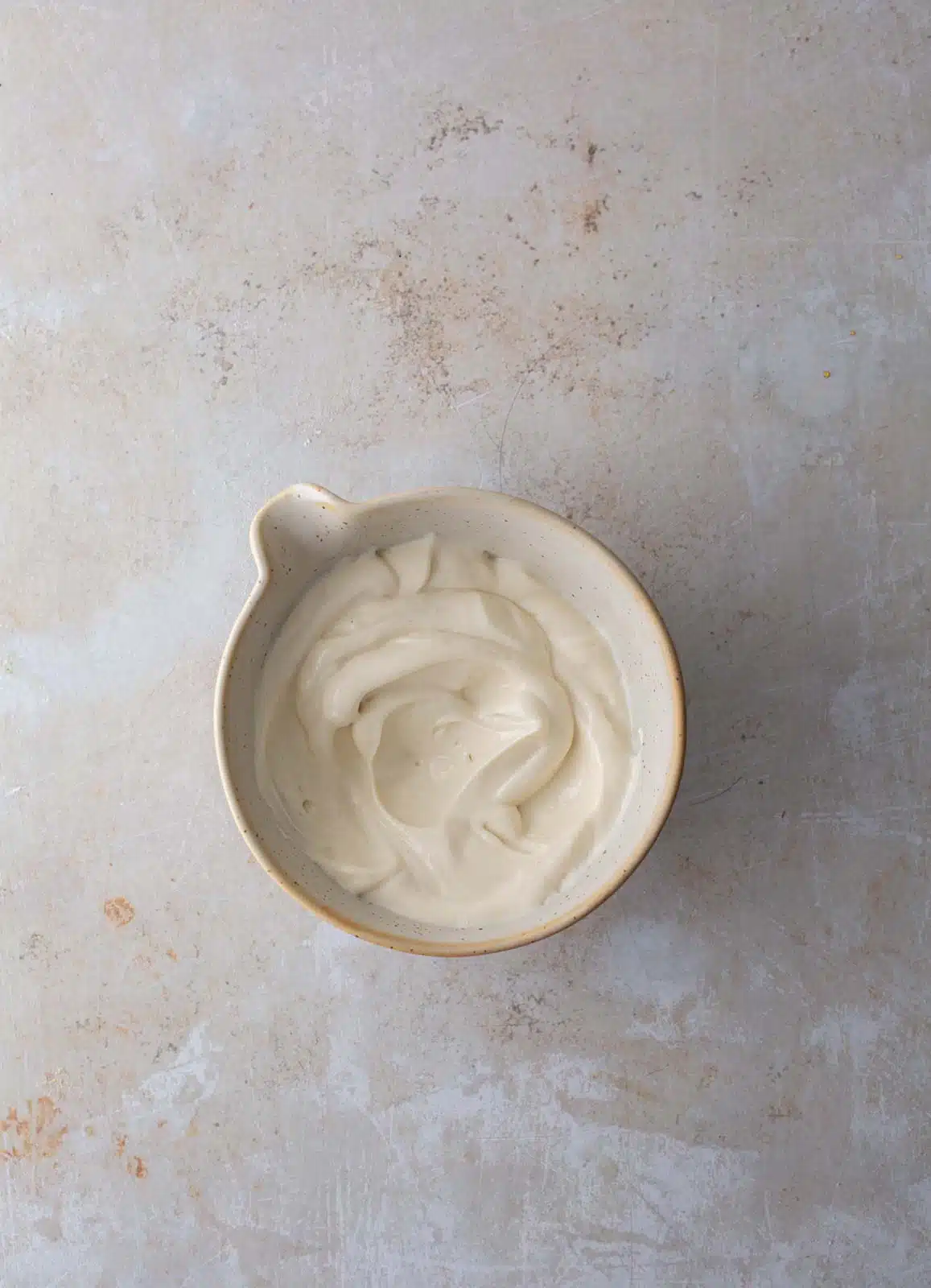
After about 3 minutes, you'll see the mayo thicken and become almost completely emulsified. Keep blending until it's thick, creamy and smooth.
Recipe Notes & Fixes
Ways to Use Your Plant-based Mayonnaise
This is the fun part. Once you've got a jar of homemade mayo in the fridge, there are plenty of ways to use it.
Customise Your Vegan Mayo
Once you've got the basic mayo down, it's easy to change things up.
How to Store Homemade Vegan Mayonnaise
In the refrigerator: Transfer your homemade vegan mayo to a clean jar with a lid and store it in the fridge for up to 7 days. Because this recipe doesn't contain preservatives, I don't recommend keeping it beyond that.
FAQs
Homemade vegan mayo will keep for up to 7 days in a sealed container in the refrigerator.
I wouldn't recommend freezing homemade vegan mayonnaise. Freezing causes the water in the emulsion to form ice crystals, which can break the emulsion and cause the mayonnaise to separate when it thaws.
Neutral-flavoured oils work best in vegan mayonnaise. I use sunflower oil, but canola or vegetable oil will also work. I'd avoid coconut oil because it will firm up in the fridge, and strongly flavoured oils can change the flavour of the mayo.
The secret is kala namak, or Indian black salt. Its naturally high sulphur content gives it that distinctive eggy aroma and flavour, which is what makes this vegan mayo taste so much like traditional mayonnaise.
Try These Other Plant-based Condiments & Sauces

Sign up to my newsletter and follow along on Facebook, Pinterest and Insta for all the latest news. If you like this recipe, please check out my cookbook "Great Vegan Meals for the Carnivorous Family" It's full of simple, carnivore-approved family recipes.
Make This Recipe
5-Minute Vegan Mayo that Tastes Like Mayonnaise
Equipment
- immersion blender or stand blender
Ingredients
- ⅓ cup unsweetened soy milk 80ml
- ½ teaspoon maple syrup
- ¾ teaspoon apple cider vinegar
- 1 teaspoon mustard powder
- ¼ teaspoon kala namak (Indian Black Salt)
- 1 teaspoon lemon juice
- ½ teaspoon sea salt
- ½ cup + 2 tablespoon sunflower oil 165ml
Instructions
- Place the soy milk, maple syrup, apple cider vinegar, mustard powder, kala namak, lemon juice, and sea salt in your blender. Blend until well combined before slowly add the sunflower oil in a slow, steady stream. Keeping blending until the mayonnaise emulsifies into a thick and creamy spread.
- Store in an airtight container in the refrigerator for up to 5 days.
Notes
- I have made my vegan mayo with both an immersion blender and my Vitamix and they both worked. I kept my Vitamix at a low speed to get a little control over the situation and avoid wearing my mayo. If I had to choose I would say using the immersion blender works a little better. The immersion blender is reliable (vs different brands of blenders) and you can see and control what's going on.
- Using room temperature ingredients works better as you are blending temperate ingredients together. Adding room temp oil to cold soy milk can cause splitting and a little extra work to get the mayo back. Save yourself the trouble and use room temperature ingredients.
- Store-bought mayonnaise keeps in the fridge for a long time (I have a jar of Vegenaise living in the back of my fridge somewhere!). Homemade vegan mayo will only keep for up to 5 days in a sealed container. The plus side is that it won't keep as long because we haven't added any preservatives.
- If your mayo isn't thickening add a little more oil and continue to blend. Note that the mayo will continue to thicken in the refrigerator.
Nutritional Disclaimer
The nutritional information is an estimate only and is automatically calculated using online tools. For accurate results, we recommend calculating the nutritional information based on the ingredients and brands you use.


Lori Bolchalk says
Excellent mayo, the black salt is a game changer and the seasonings and acids are perfect. I’ve bought vegan mayonnaise before from the store and I think this is superior in flavor and texture.
Amanda says
Oh, that's awesome, Lori. I am so happy you like it. It took me a while to get the balance of this mayo right - but it was so worth it. Thanks for for reaching out. 🙂
KathyRae says
This is an excellent recipe! My black Indian salt was probably much finer (powdery) than normal so was slightly more salty in the end then I wanted… But this recipe is a keeper and I will definitely make it again!excellent flavour!
Amanda says
Oh, that's awesome KathyRae and I will make note of the differences in the salt levels - I hadn't thought of that. Thank you! I am so happy you like the mayo and thanks for letting me know x
Catherine says
I’ve tried a lot of different recipes and brands of vegan mayonnaise and never been happy with the flavor or the texture. This recipe is by far the best for a vegan mayonnaise that I have tried. The black salt is essential for giving it that specifically mayonnaise eggy taste. The ratios of mustard, salt, lemon and vinegar are spot on. amount of salt and mustard. The texture is smooth, light, and creamy. Thank you for developing this recipe. It’s a winner.
Amanda says
Thanks so much Catherine. I love this mayo - it took me a while to get the ratios right but I am so happy with it now. We don't have too many vegan mayo offerings here in Australia so, I had to go ahead and make my own. I am so happy you enjoyed it and thank you for taking the time to comment. It means a lot. x