
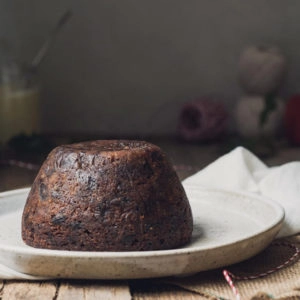
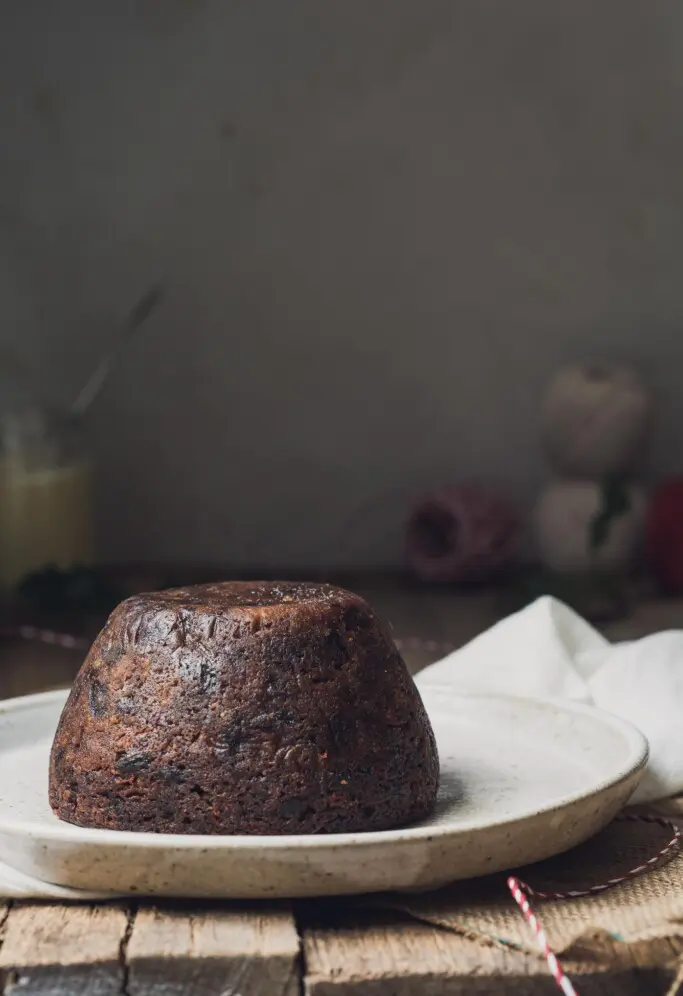
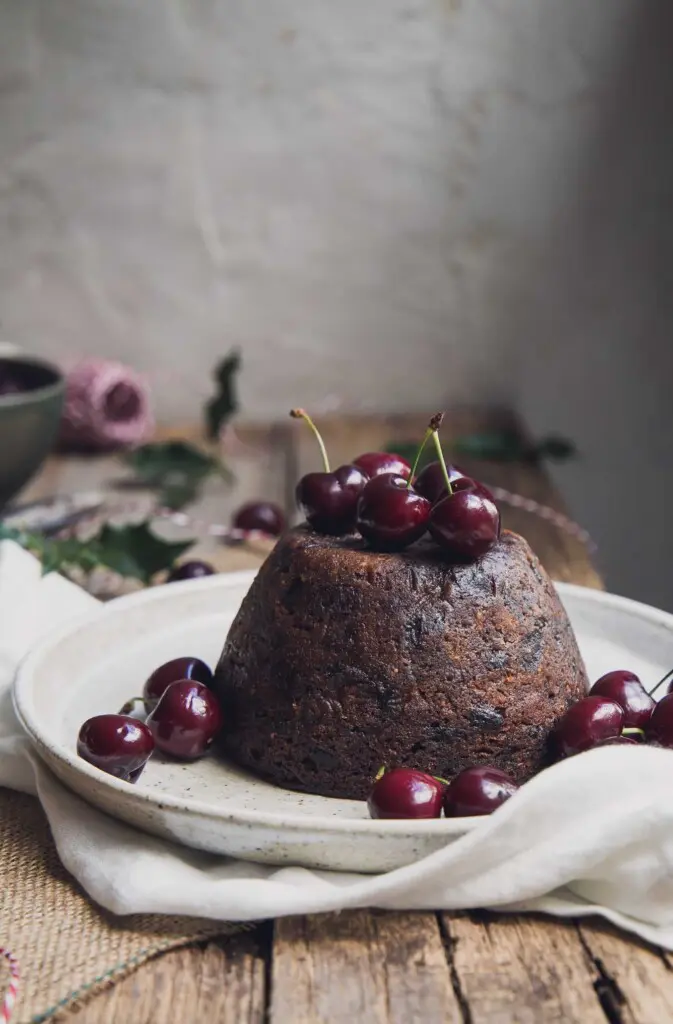
This vegan Christmas pudding is packed with plump medjool dates, golden sultanas, dried cranberries, dried pears and pecans, all brought together with warming spices, fresh orange and a good splash of brandy. It's a traditional-style Christmas dessert with a few of my favourite ingredients thrown in, and it's surprisingly easy to make.
And yes, I am totally feeling like a festive Martha Stewart over here.
While Christmas pudding is traditionally made a few weeks ahead to give the flavours time to develop, you can make this one the day before and still have a cracking dessert for the big day. Make ahead if you can, feed it a little brandy along the way, and serve it warm with vegan brandy sauce or your favourite dairy-free ice cream.
Why You'll Love this Vegan Christmas Pudding
Vegan Christmas Menu
Make the festive season easy and delicious with this holiday menu.
What is Stir-Up Sunday?
Stir-up Sunday is the traditional day for making Christmas pudding. It falls on the last Sunday before Advent, roughly four to five weeks before Christmas.
The name comes from the opening words of the Church of England's Book of Common Prayer for that Sunday: "Stir up, we beseech thee, O Lord..." Families took the cue literally and gathered to stir their puddings, with everyone taking a turn and making a wish.
Is Christmas Pudding the Same as PLum Pudding?
Yes! Christmas pudding and plum pudding are two names for essentially the same dessert. Despite the name, modern plum pudding doesn't need to contain plums. Historically, the word "plum" was often used to refer to dried fruits such as raisins and currants.
The pudding evolved from earlier medieval dishes made with meat, grains, dried fruit and spices into the rich, fruit-filled dessert we know today. Thankfully, there's no meat in this version.
Ingredients for Vegan Christmas Pudding
Medjool dates. These add natural sweetness and a rich, sticky texture.
Golden sultanas. For that classic Christmas pudding fruitiness.
Dried cranberries and pears. A little variation from the traditional raisins and currants, with a lovely balance of sweet and tart flavours.
Brandy. Used to soak the dried fruit, adding depth and a distinctly festive flavour.
Pecans. For a little crunch and nuttiness.
Sourdough breadcrumbs. These help bind the pudding and give it structure. Use a plain sourdough without strongly flavoured additions.
Self-raising flour. Helps give the pudding its texture.
Dark brown sugar. Adds sweetness and a deeper caramel flavour.
Allspice. A warming spice that complements the fruit.
Coconut oil. A plant-based alternative to traditional suet.
Orange zest and juice. Fresh orange lifts the rich fruit and spices.
Aquafaba. The liquid from a tin of chickpeas, used in place of eggs.
How to Make Vegan Christmas Pudding
Step 1. Soak the dried fruit
Combine the sultanas, chopped dates, cranberries and dried pears in a large bowl. Pour over the brandy and stir well. Cover and leave overnight so the fruit can soak up all that boozy flavour.
Step 2. Prepare the pudding mixture
Grease a 1-litre pudding basin and line the base with a circle of baking paper. Roughly chop the pecans and add them and the breadcrumbs to the dried fruit, followed by the flour, brown sugar, allspice, melted coconut oil, orange zest and juice, and aquafaba. Stir everything until completely combined.
Step 3. Cover the pudding basin
Spoon the mixture into the prepared pudding basin and smooth the top.
Cut two circles of baking paper large enough to cover the basin with some overhang. Fold a pleat through the centre of each circle to allow room for the pudding to expand. Place the paper over the basin, cover with foil, and secure everything tightly with kitchen string.
The most difficult part for me was tying the damn string around the mouth of my pudding pot. I was alone and had to use my boobs to hold the string in place while I tied the ends with my fingers. I found a YouTube video with a nice lady doing a far more graceful job of it, so I'll leave the link here (you can find the instructions for setting up your pudding bowl at 1 min 35 seconds).
Step 4. Steam the pudding
Place a saucer upside down in a large saucepan to function as a trivet and place the pudding basin on top. Pour boiling water into the pan so that it comes about halfway up the pudding basin - don't let it touch the foil.
Cover the saucepan with a lid and bring the water to a gentle simmer. Steam the pudding for around 5 hours. Try not to remove the lid too often, but check the water level occasionally and top up with boiling water as needed.
The pudding is ready when a skewer inserted into the centre comes out clean. Carefully, using oven gloves to protect your mitts, remove the basin from the saucepan and allow it to cool slightly before serving, or cool completely if making ahead.
Step 5. Serve or store.
You can serve the pudding straight away or cool it completely and store it for later.
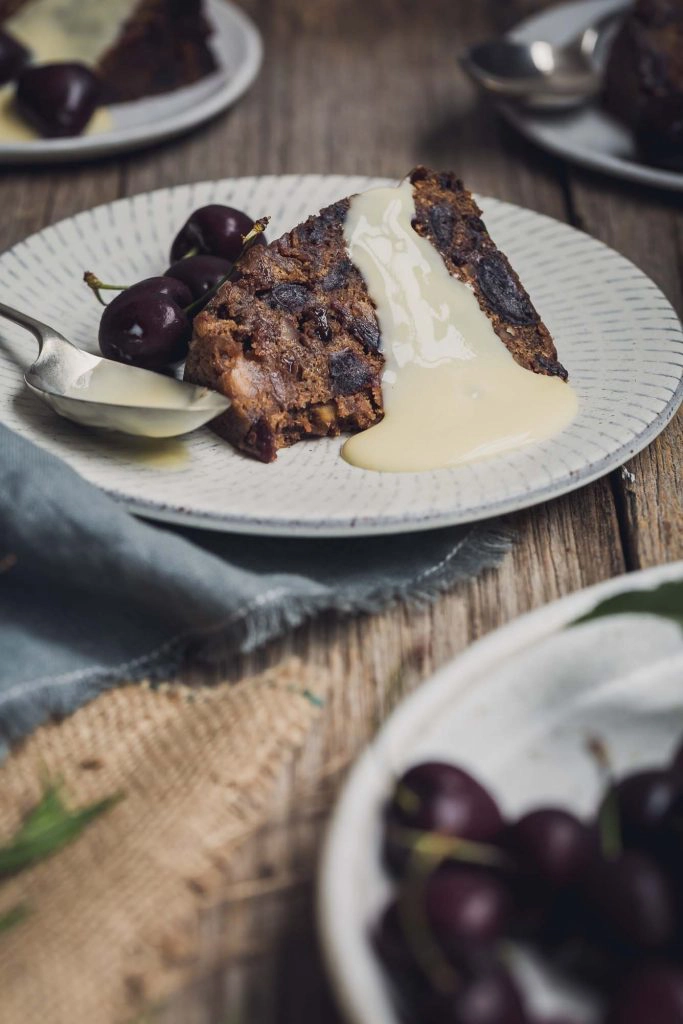
Serve warm with vegan brandy sauce or dairy-free ice cream, and enjoy your very own Christmas pudding.
Storage
To store. Christmas pudding is traditionally made ahead and stored in a cool, dark cupboard until Christmas. However, in warmer climates like Australia, this may not be suitable. If you choose to store your pudding at room temperature, wrap it well and keep it in the coolest, darkest place available. Check it regularly for signs of mould (see FAQs below).
In cooler climates, Christmas pudding can traditionally be stored for up to three months when made with alcohol and fed every week or two with a little extra brandy. If you're unsure about storing your pudding at room temperature, allow it to cool completely, wrap it well and refrigerate instead.
To freeze. Once cool, remove the pudding from the basin and wrap it securely in baking paper and foil, or place it in an airtight container. Freeze for up to 3 months. Thaw overnight in the refrigerator before reheating.
To reheat. For the best texture, return the pudding to its basin, cover securely and steam in a saucepan of gently simmering water until heated through. Allow extra time if reheating the whole pudding from chilled. Individual portions can also be reheated in the microwave.
FAQs
Traditional Christmas puddings were often made weeks ahead and left to mature before Christmas. However, this tradition developed in cooler European winters, rather than Australia's warmer conditions. Heat and moisture can increase the risk of mould, so I recommend refrigerating this homemade pudding rather than leaving it at room temperature for extended periods.
Traditional Christmas puddings usually contain alcohol, but if you'd prefer to skip the booze, fruit juice or spiced tea may be used instead. I'd recommend finding a recipe specifically developed to be alcohol-free rather than swapping ingredients in a traditional pudding recipe, as the liquid affects the flavour and texture. This recipe hasn't been tested sober. We like our desserts good and drunk at Christmas.
Make This Recipe
My Favourite Christmas Pudding Recipe
Ingredients
- 110 grams golden sultanas ¾ cup
- 200 grams pitted medjool dates, well chopped approx 11 dates
- 50 grams dried cranberries scant ⅓ cup
- 100 grams dried pears, well chopped approx 6 slices
- 80 ml brandy ⅓ cup
- 75 grams pecans ¾ cup
- 80 grams breadcrumbs 1 cup (AUS)
- 190 grams self-rising flour ¾ cup
- 210 grams soft brown sugar, packed 1 cup
- 1 teaspoon all-spice
- 80 ml coconut oil. melted ⅓ cup
- zest and juice of 1 orange
- 3 tablespoon water
- 3 tablespoon aquafaba 60 ml
Instructions
- Place the sultanas, dates, cranberries and pears in a large mixing bowl. Pour over the brandy and stir through. Cover with a clean cloth or cling film and set aside overnight.
- The next day, grease a 1-litre pudding basin and line the base with a circle of baking paper. Roughly chop the pecans and add them and the breadcrumbs to the dried fruit, followed by the flour, brown sugar, allspice, melted coconut oil, orange zest and juice, water and aquafabe. Stir everything until completely combined.
- Spoon the mixture into the prepared pudding basin and smooth the top.Cut two circles of baking paper large enough to cover the basin with some overhang. Fold a pleat through the centre of each circle to allow room for the pudding to expand. Place the paper over the basin, cover with foil, and secure everything tightly with kitchen string. Secure the cover with cooking twine as here
- Place a saucer upside down in a large saucepan, to function as a trivet, and place the pudding basin on top. Carefully, pour boiling water into the pan so that it comes about halfway up the pudding basin - don't let it touch the foil.Cover the saucepan with a lid and steam the pudding over a low heat for approximately 5 hours. Check every now and again to see if the water needs topping up but try not to remove the lid to often. As needed is fine.The pudding is ready when a skewer inserted into the centre comes out clean. Carefully remove the basin from the saucepan and allow it to cool slightly before serving, or cool completely if making ahead.
- To reheat, return the pudding to its pot and place it in a saucepan of boiling water (half-way up the sides) over low heat for 10 to 15 minutes or until warm through. You can re-heat a pudding in the microwave but it can dry it out somewhat.
- Serve with vegan brandy sauce or ice-cream.
Notes
Nutritional Disclaimer
The nutritional information is an estimate only and is automatically calculated using online tools. For accurate results, we recommend calculating the nutritional information based on the ingredients and brands you use.

Catherine O'DONAHUE says
You’ve got all my favourite ingredients for a plum pudding! Do you think it would work out if it were boiled (ina big pot on the stove) rather than steamed. I don’t have an oven
Amanda says
Hi Catherine, I haven't done the recipe this way, but I did a little internet digging and found some steamed pudding recipes that cook within the pudding bowl/tub in a pot of water. This one - https://www.taste.com.au/recipes/golden-syrup-steamed-pudding/cef42064-85ec-472d-b1c0-015a29099ec4 - might be helpful. Good luck! I hope it works out beautifully for you. 🙂
Earle Duggan says
Thank you very much, I really liked your proposal.