

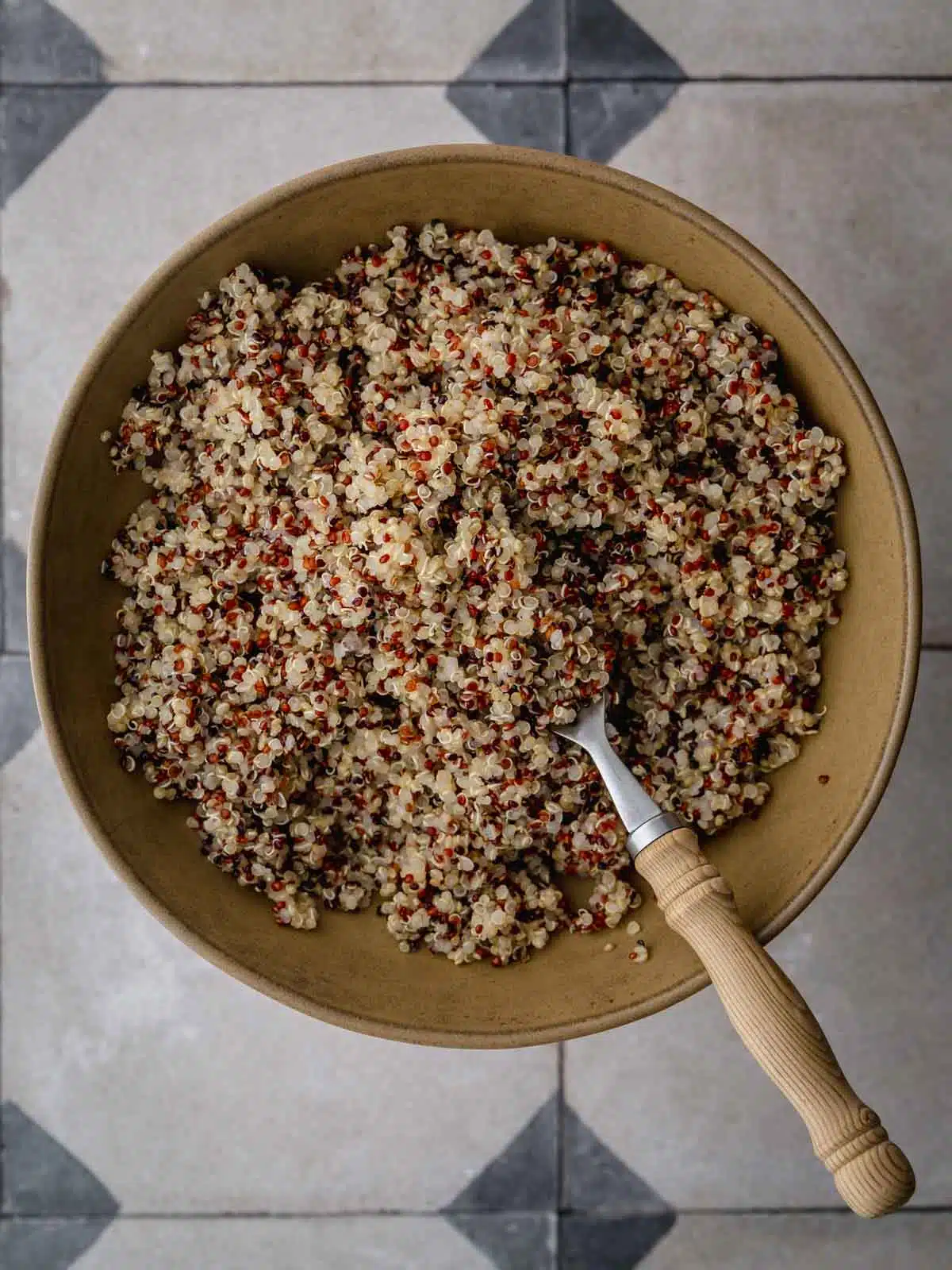
Learn to cook flavourful quinoa that isn't bitter, soapy or mushy. This tried and tested stovetop method removes bitterness, creates perfectly separated grains, and works with white, red, black, or tri-colour quinoa.
Whether you are meal prepping lunches (quinoa keeps really well in the fridge), making grain bowls, or serving your quinoa as a side, this easy recipe produces perfectly cooked quinoa every time.
Email Me This Post
Jump to:
My family has been eating quinoa for almost 20 years after my husband and I were introduced to it while living in a small town in Peru called Cajamarca. There, some very kind local cooks taught me to make local staples, quinoa being one of them.
Why You'll Love Cooking with Quinoa
What is Quinoa?
Quinoa (pronounced KEEN-wah) is a seed that cooks like a grain. Native to South America, it's naturally gluten-free and one of the few plant foods considered a complete protein because it contains all nine essential amino acids in adequate amounts.
Ingredients for Perfectly Cooked Stovetop Quinoa
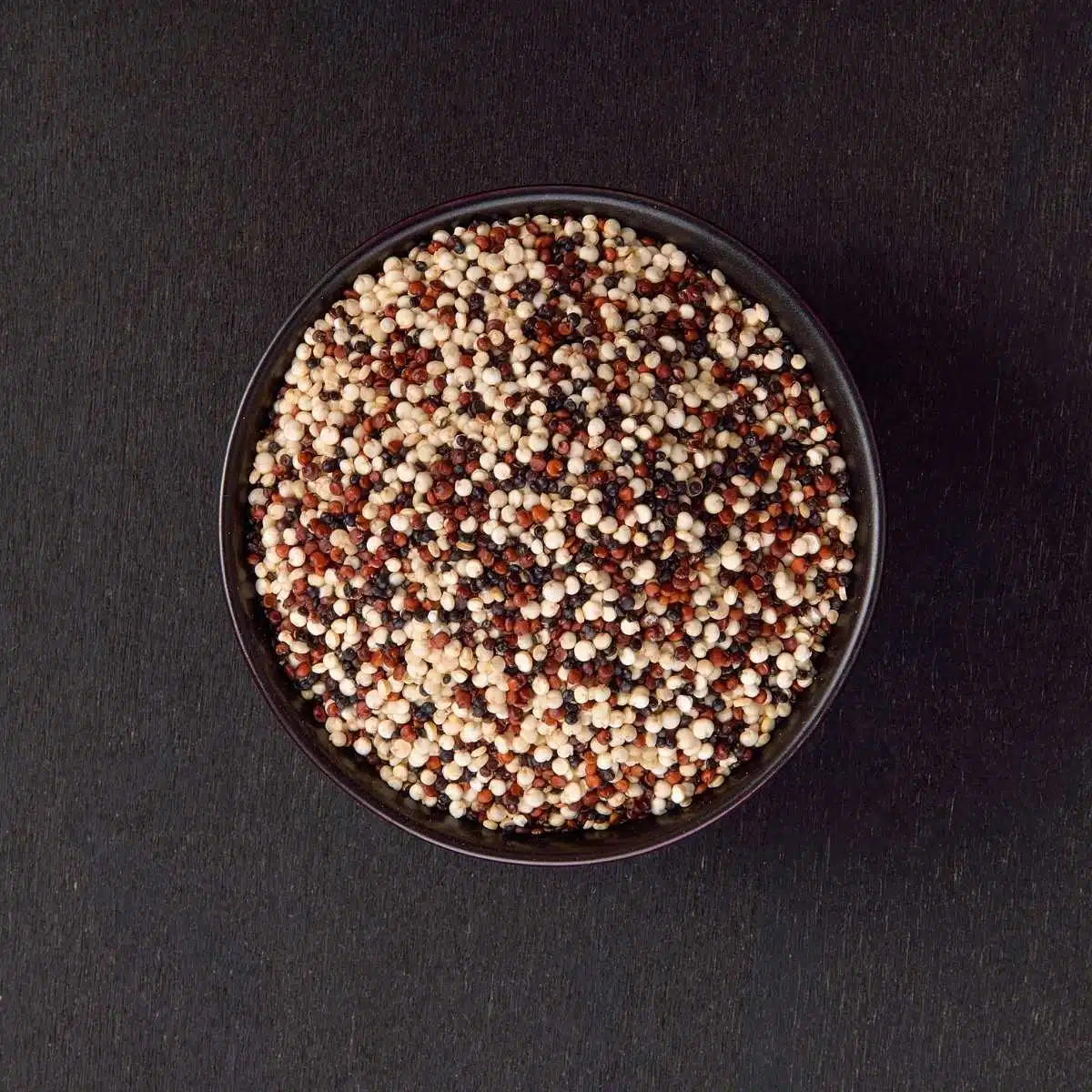
Dried quinoa. This fool-proof recipe works with any quinoa - white, red, tri-coloured. Whichever you can get your hands on.
Water or broth. As long as you stick to the ratio, you can cook perfectly cooked quinoa wit either water or flavour it with broth.
Salt. A pinch of salt brings out the nuttiness of the cooked grain.
What is the Best Ratio Quinoa to Water Ratio?
The perfect ratio for beautifully cooked quinoa using an absorption technique is 1 cup of quinoa to 1.5 cups liquid so, 1:1.5 ratio.
Why Less Water is Better
Food sites and recipe developers consistently recommend a 1:2 ratio (1 cup quinoa: 2 cups water). The 1:2 ratio of quinoa to water is a long-standing culinary rule of thumb, but it often results in mushy, waterlogged quinoa.
Here's why the 1:2 ratio became the standard and why you should probably ignore it:
So, what does this mean? Perfectly cooked quinoa should have a slight pop to it when you eat. Cooking in less water delivers that unique texture.
Should I Rinse Quinoa Before Cooking?
To rinse or not to rinse, that is the question.
And the answer is yes, you should rinse quinoa before cooking it to remove saponin, a naturally occurring chemical compound (a phytochemical) that coats the outside of each tiny seed. Think of saponin as nature's built-in security system - it tastes terrible to birds, insects, and foraging animals, protecting the plant while it grows.
It's not toxic, it's just a bit bitter and gross. Most commercially available quinoa has been treated to remove saponin, but washing it is still a good idea.
How to Cook Quinoa
You'll find full instructions and measurements in the recipe card at the bottom of the post.
Step 1. Rinse the Quinoa
Takes 1-2 minutes
There are two ways to wash quinoa. Either place your quinoa in a fine-mesh strainer and rinse thoroughly under cold running water for at least 30 seconds. Rub the seeds with your fingers to ensure any residual saponin is fully washed away. Or, like I do, pop the quinoa in a pot with water and swish it around with your hand. Drain and repeat 3 times.
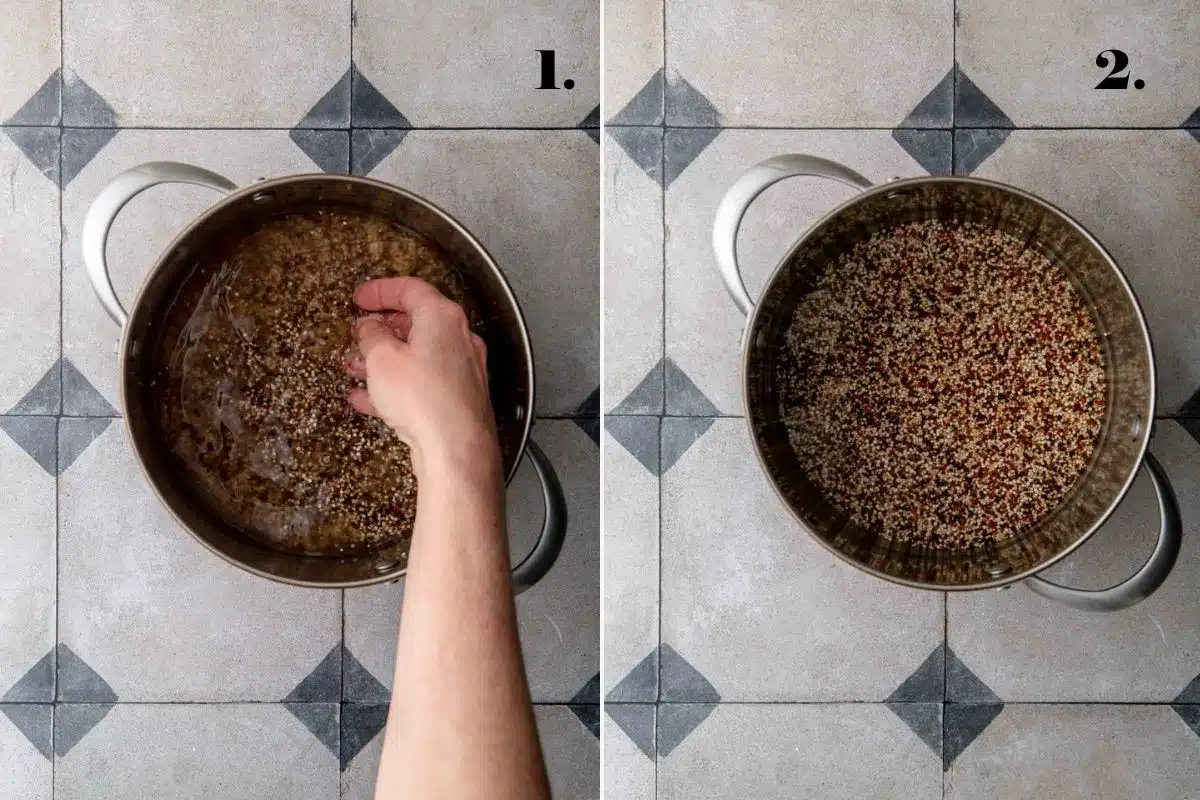
Steps 2 & 3. Add Liquid and Bring to a Boil
Ratio 1:1.5
Pour in 1.5 cups of water with a pinch of salt, or broth. Bring the mixture to a rolling boil.
Step 4. Simmer Low and Covered
14-15 minutes
As soon the liquid comes up to a boil, cover the pot with a tight-fitting lid and turn the heat down to your stove's lowest setting. Let it simmer undisturbed for 15 minutes-no looking! Trust the process.
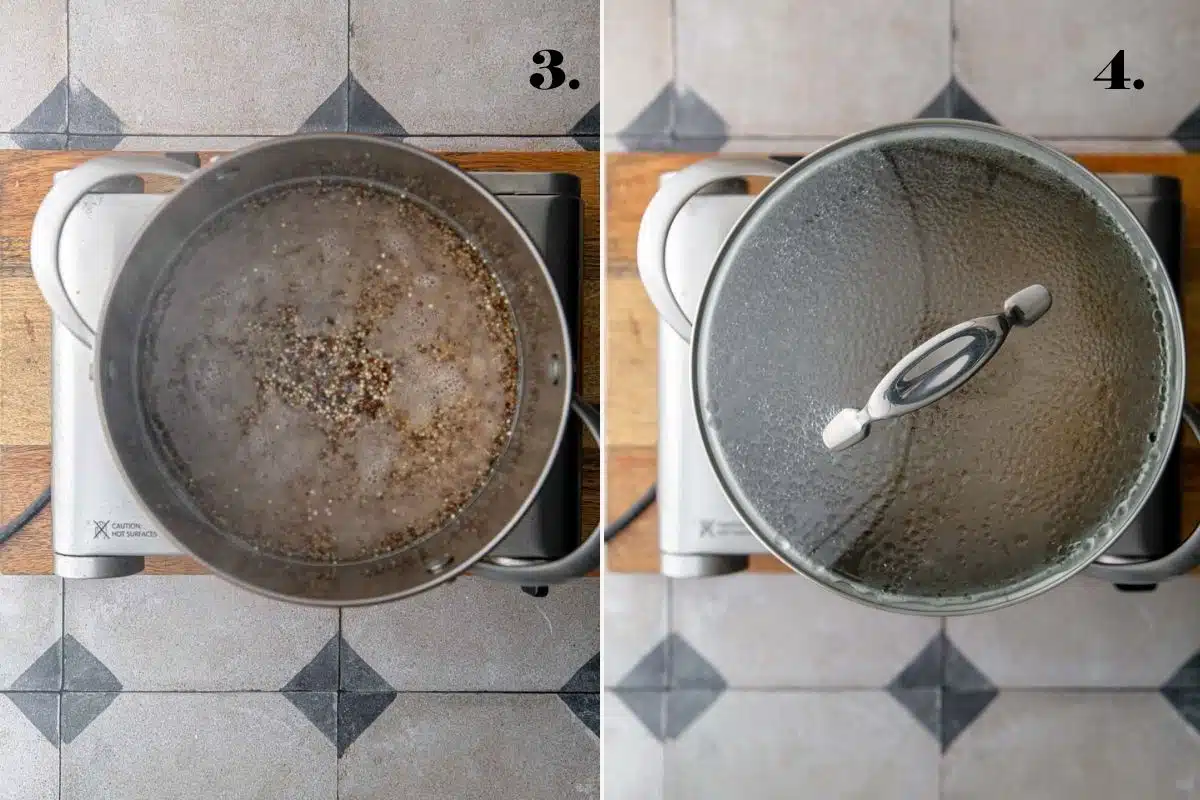
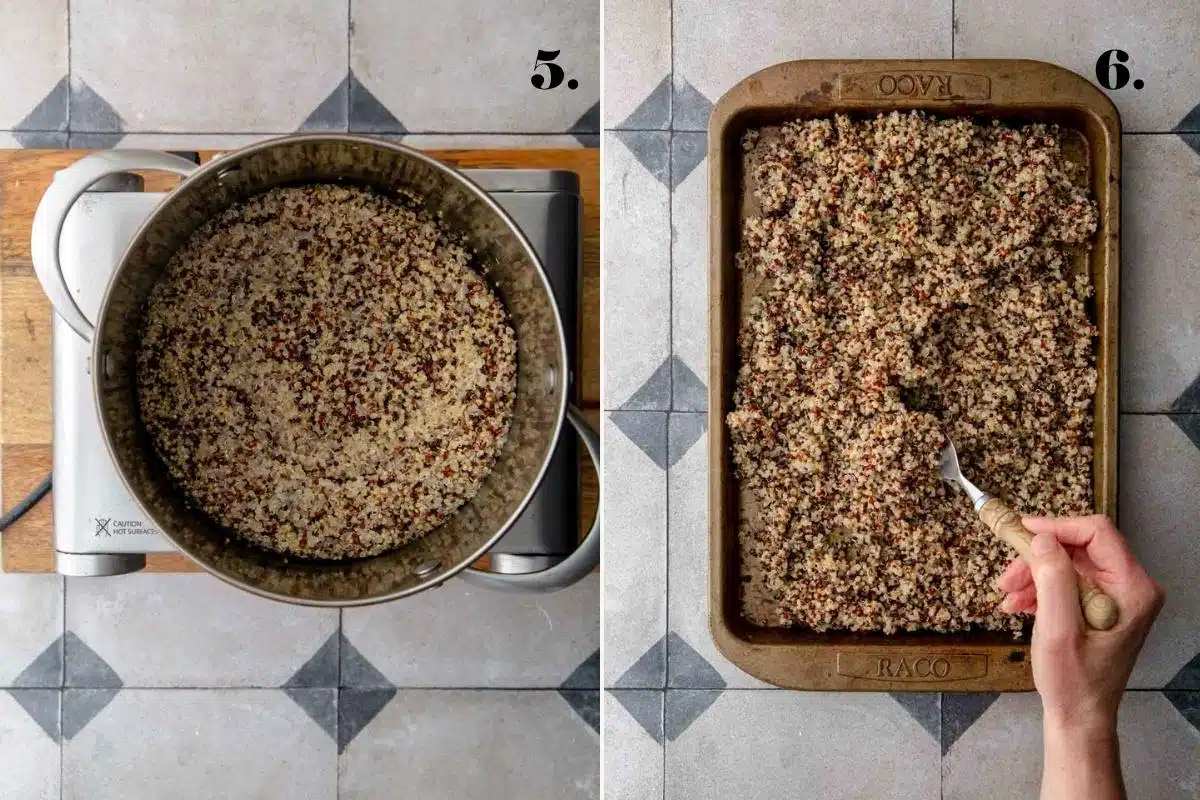
Step 5. Rest and Steam
Crucial - 10 minutes
Remove the pot from the heat but leave the lid on. Let it sit and steam in its own residual heat for 10 minutes. This allows any remaining moisture to distribute evenly.
Step 6. Fluff and Turn it Out
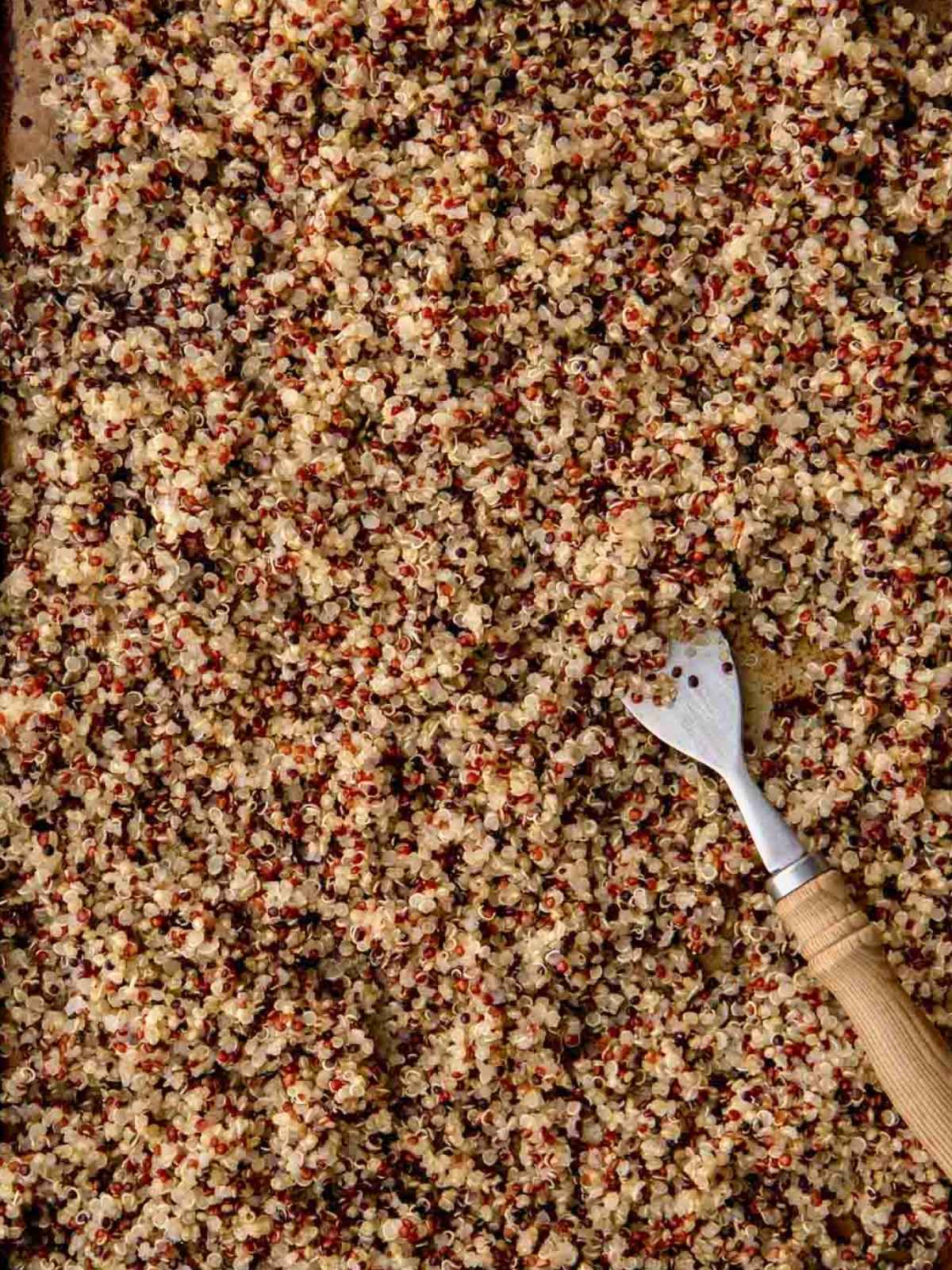
Use a fork, not a spoon, to gently fluff the grains. It's ready to use now, but as an added step (sorry), I spread my quinoa out onto a baking pan for 5 minutes to dry it out a little.
How to Serve Quinoa
Quinoa is really versatile.
Storage
Store uncooked quinoa in an airtight container in the pantry, away from direct light, for up to 1 year.
Cooked quinoa can be stored in an airtight container in the fridge for up to a week. However, always check for fur or funky smells. If in doubt, compost it.
Store cooked quinoa in the freezer, in portion-size freezer bags for up to 6-months. To thaw, transfer the frozen quinoa from the freezer to the kitchen counter and allow it to thaw for around 60 minutes before using it in your recipe. Frozen quinoa can be added directly to soups and stews to reheat.
FAQs
One cup of dried quinoa yields around 3 cups of cooked quinoa.
Quinoa keeps well in the fridge for up to 7 days. However, always check for funky odours or fur - when it doubt, toss it out.
Make This Recipe
How to Cook Perfect Quinoa
Equipment
- 1 pot
Ingredients
- 1 cup dry quinoa
- 1½ cups boiling water
- pinch salt
Instructions
- Wash the Quinoa. You can either place your quinoa in a fine-mesh strainer and rinse thoroughly under cold running water for at least 30 seconds, rubbing the seeds with your fingers to ensure any residual saponin is washed away. Or, like I do, pop the quinoa in a pot with water and swish it around with your hand. Drain and repeat 3 times.
- Bring up to a Boil. Add the quinoa to a pot with 1.5 cups of water and a pinch of salt, or broth. Bring the mixture to a rolling boil.
- Simmer on Low. Once the liquid comes up to a boil, cover the pot with a tight-fitting lid and turn the heat down to your stove's lowest setting. Let it simmer undisturbed for 15 minutes. Don't remove the lid - I know, the urge to look is huge but resist it.
- Sit. Remove the pot from the heat leaving the lid on. Let it sit and steam in its own heat for 10 minutes. This allows any remaining moisture to distribute evenly.
- Fluff the Quinoa. Using a fork, not a spoon, gently fluff the grains. It's ready to use now, but as an added step (sorry), I spread my quinoa out onto a baking pan for 5 minutes to dry it out a little.
Nutritional Disclaimer
The nutritional information is an estimate only and is automatically calculated using online tools. For accurate results, we recommend calculating the nutritional information based on the ingredients and brands you use.


Comments
No Comments