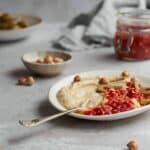
Shatta (Middle Eastern Chilli Paste) Recipe
Shatta sauce is a traditional Middle Eastern hot sauce made from fresh chillies, salt, vinegar and olive oil. This lightly fermented sauce adds a spicy kick to dishes in seconds. Main ingredients: chillies, salt, vinegar, lemon, olive oil.
Servings: 20
Calories: 31kcal
Equipment
- Sterilised jars
- Food processor or mortar & pestle
Ingredients
- 250 grams long red or jalapeño chillies stems removed
- 1 tablespoon salt, non-iodised with no caking agents
- 3 tablespoon apple cider vinegar
- 1 teaspoon lemon juice
- 3 tablespoon olive oil enough to cover the paste in the jar
Instructions
- Sterilise a 500ml jar and lid. Instructions for sterilising jars.
- Slice the chillies into coin-width rounds.
- Combine the sliced chillies with the salt and stir through well.
- Transfer the salted chillies to the jar and pop the lid on. Place the jar in a cool, dark place for 3 days or transfer to the fridge for up to 7 days.
- Drain the chillies through a colander or sieve and transfer them to a food processor or mortar and pestle.
- Add the vinegar and lemon juice and process - or pound in the pestle - until you are happy with the texture. I like mine saucy, but with texture.
- Transfer the chilli paste back to its jar and pour in enough olive oil to cover it before storing in the fridge. (see notes)
Notes
Yields = 1 and ¼ cups
Recipe from Falastin by Sami Tamimi and Tara Wigley
Recipe Notes
Solidifying olive oil.
Olive oil naturally solidifies in the fridge, but there are a few easy ways to bring it back to a pourable consistency.
Either take the Shatta out of the fridge 10 minutes before serving, or sit the sealed jar in a bowl of warm water until the oil softens.
Also, you can also simply spoon out the amount you need and warm it briefly in the microwave.
Fermenting time. If you live in a cooler climate, leaving the salted chillies out on the counter for 3 days is fine. If it's hot where you live, or humid, maybe pop them in the fridge for 5-7 days.
Food safety and storage.
I make Shatta regularly and, protected by a layer of olive oil, it generally keeps in the fridge in a sealed jar for 3-6-months. It is safest to check your sauce each time you use it and always serve it with a clean spoon. If it smells putrid or has developed mould, ditch it. Better safe than sorry.
While this sauce is lightly fermented, it is not as robust as fermented vegetables stored in brine. Check the sauce regularly and discard it if you notice any signs of spoilage.
Nutrition
Serving: 1tablespoon | Calories: 31kcal | Carbohydrates: 1g | Protein: 0.2g | Fat: 3g | Saturated Fat: 0.4g | Polyunsaturated Fat: 0.3g | Monounsaturated Fat: 2g | Sodium: 473mg | Potassium: 43mg | Fiber: 0.2g | Sugar: 1g | Vitamin A: 119IU | Vitamin C: 18mg | Calcium: 2mg | Iron: 0.2mg
